Replacing Citrix doesn't automatically mean buying another VDI product. Depending on workload, security needs, and staff capacity, the right answer might be cloud VDI, dedicated Cloud PCs, hybrid VDI, or simple application publishing.
This guide covers five alternatives: Azure Virtual Desktop, Windows 365, Omnissa Horizon, Amazon WorkSpaces, and Parallels RAS. It compares them on architecture, management responsibility, cost, security, scalability, and migration fit.
Key Takeaways
- Citrix alternatives range from customer-managed cloud VDI to dedicated Cloud PCs and app-delivery tools.
- Azure Virtual Desktop suits Azure, Entra ID, and Microsoft 365 shops, but still needs real design and operations work.
- Windows 365 trades flexibility for simpler, dedicated Cloud PCs at a fixed per-user price.
- Horizon, WorkSpaces, and Parallels RAS fit hybrid VDI, AWS-centered, and published-app scenarios respectively.
- Compare total cost, identity controls, migration effort, and day-two management, not license price alone.
Overview of Citrix in the US Market
What Citrix Does
Citrix delivers centrally hosted Windows applications and desktops to users on any device. The pieces work together:
- Broker: authenticates users and load-balances connections to apps and desktops
- Gateway: provides TLS-secured access through the firewall
- HDX/ICA: carries the remote-session traffic
- VDA: the agent on each machine that handles connections and session policies
- Cloud Connector: links Citrix Cloud to resources in your own locations
Citrix's own documentation separates Citrix DaaS, where the cloud brokers connections, from Citrix Virtual Apps and Desktops, the on-premises product.
Why US Teams Are Re-Evaluating
Ownership and packaging have shifted. Vista and Evergreen completed the Citrix acquisition on September 30, 2022, combining it with TIBCO to form Cloud Software Group.
In June 2024, Citrix said three subscription packages (Citrix for Private Cloud, Universal Hybrid Multi-Cloud, and Platform License) would replace discontinued SKUs. Standalone and add-on licensing was being retired at the same time.
Other pressures stack on top:
- Specialist admin skills that are hard to hire and retain
- Cloud modernization programs that favor hosted desktops
- Variable remote and hybrid work patterns
- Audit and cyber-insurance evidence requirements
Gartner's August 2025 forecast projects desktop-as-a-service revenue growing at roughly 8% annually from 2025 to 2029, against about 2% for on-premises VDI. That's a forecast, not observed US market share, but the direction is clear.

Direct Replacement vs. Architectural Alternative
Common paths fall into a few buckets:
- Omnissa Horizon is the closest to a traditional VDI swap
- Azure Virtual Desktop (AVD) and Amazon WorkSpaces are cloud-hosted desktop services
- Windows 365 delivers dedicated Cloud PCs
- Parallels RAS focuses on simpler app and desktop delivery
The list below is a practical 2026 shortlist, not a universal ranking. Plan names and pricing change often, so confirm details with each vendor before signing anything.
Top Citrix Alternatives and Competitors for US Organizations in 2026
Each option below is weighed on enterprise relevance, deployment flexibility, identity integration, user experience, admin effort, cost transparency, and fit for common Citrix migration scenarios.
| Option | Delivery model | Who runs what | Billing unit |
|---|---|---|---|
| Azure Virtual Desktop | Apps and desktops, multi-session | Microsoft runs brokering; you run hosts | License plus Azure usage |
| Windows 365 | Dedicated Cloud PC | Microsoft cloud with Intune management | Fixed monthly per user |
| Omnissa Horizon | Apps and desktops, Blast protocol | You, on-premises or in cloud | Named or concurrent user subscription |
| Amazon WorkSpaces | Persistent or nonpersistent desktops | AWS service; Core uses third-party management | Monthly or hourly |
| Parallels RAS | Published apps and desktops | You, on server or cloud infrastructure | Concurrent-user subscription |
Microsoft Azure Virtual Desktop
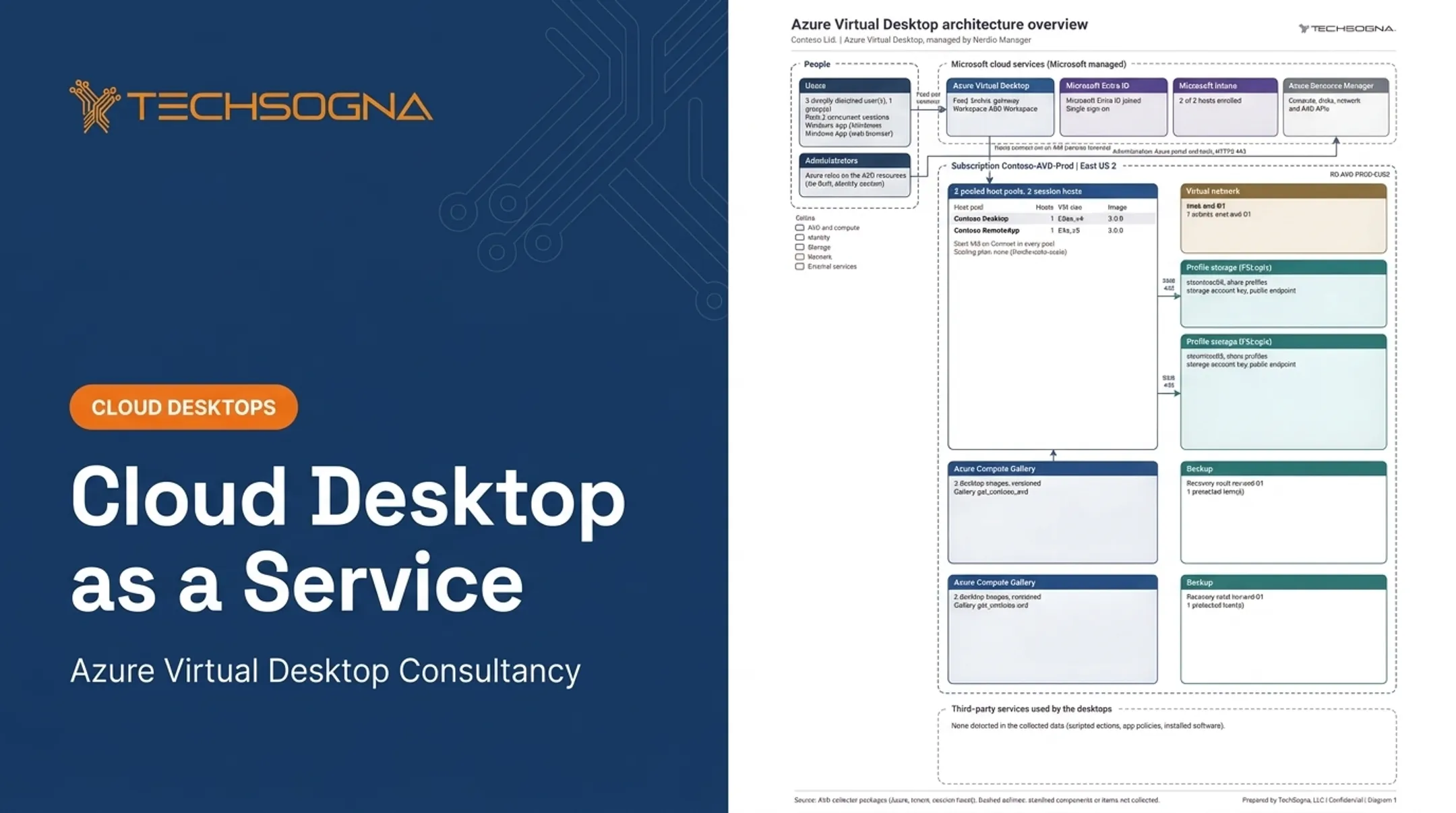
Azure Virtual Desktop (AVD) delivers full desktops or RemoteApp applications, in single-session or multi-session Windows. Microsoft manages the gateways and brokers. You manage session images and VMs in your own Azure subscription.
The ecosystem is the draw. Entra Conditional Access governs access risk, Intune handles software distribution, and Microsoft Defender integrations cover security. Windows 11 Enterprise multi-session lets many users share one host, which cuts the number of VMs to patch.
Best fit:
- Microsoft-centric enterprises
- Teams that want cloud or hybrid desktop delivery
- Organizations needing granular control of Azure resources
Watch for: AVD is customer-operated. Someone must own images, host pools, FSLogix profiles, identity, networking, security, and optimization. Session-host security remains yours or your partner's.
Pricing: There's no universal per-desktop price. Microsoft's AVD costing guidance separates licensing from compute, disks, storage, network egress, identity, and monitoring. User counts, hours, and concurrency drive the total.
Eligible Microsoft 365 and Windows Enterprise licenses include AVD access. Microsoft's October 2026 list pricing for external users is $10 per user per month for desktops and $5.50 for apps.
Hybrid options differ:
- AVD on Azure Local supports Windows 11 multi-session, with brokering still in Azure.
- AVD Hybrid, with session hosts on existing on-premises infrastructure, does not support Windows Enterprise multi-session.
Where Nerdio fits: Nerdio Manager for Enterprise is a management and automation layer for AVD and Windows 365, covering auto-scaling, image management, and scripted actions. It isn't a standalone Citrix replacement, and it isn't a native Microsoft product.
Microsoft Windows 365 Cloud PC
Windows 365 assigns each user a persistent, personalized Windows Cloud PC. It's a 1:1 user-to-PC model, not pooled or multi-session VDI. Users connect through the Windows App or a browser.
Editions to know:
- Business: up to 300 seats, simplified management
- Enterprise: unlimited seats and full Intune integration; requires Windows E3, Intune, and Entra ID P1
- Government: spans a regulated US Government Community Cloud and a public-facing cloud
- Flex (formerly Frontline): shift-style access in dedicated mode (up to three Cloud PCs per license, used one at a time) or shared mode
One caution on Flex: shared mode deletes user data after each session, while dedicated mode preserves it.
Why it may suit you:
- Fixed monthly per-user pricing, though network usage costs may apply
- Fast onboarding and offboarding for contractors and seasonal workers
- No traditional VDI control plane to operate
- Managed in Intune like a physical PC, with Conditional Access and MFA through Entra ID
When Windows 365 is simpler than AVD: each person needs a consistent personal desktop, budgets must be predictable, and you don't want a platform team.
When AVD wins: pooled sessions, heavy image customization, or workloads where usage-based pricing beats a license for every user. Microsoft frames it the same way: Windows 365 for fixed pricing and simplicity, AVD for usage-based pricing and configuration control.
Omnissa Horizon
Omnissa Horizon is the former VMware Horizon. KKR completed its acquisition of the VMware end-user computing business from Broadcom on July 1, 2024, and Omnissa launched as an independent company.
Horizon 8 supports on-premises, private-cloud, and public-cloud deployments. Horizon Cloud is a separate offering, not an interchangeable label.
Current architecture documentation covers VMware vSphere and Nutanix AHV, plus specific cloud paths: VMware Cloud on AWS, Azure VMware Solution, Google Cloud VMware Engine, and Oracle Cloud VMware Solution. That isn't blanket support for every native cloud VM. The protocol is Blast Extreme.
Licensing: New Horizon licenses are subscription-only (SaaS or term), measured by named user or concurrent user, with support included.
Best fit:
- Enterprises with VMware skills and data-center investments
- Complex desktop policies
- Teams that want tight infrastructure control
The tradeoff is operational. Horizon keeps much of the complexity of traditional VDI. Whether it beats Citrix for you depends on your existing infrastructure and operating model, not on any universal ranking. If you already run vSphere and have the staff, the move can be gentle. If you're escaping infrastructure ownership, it won't help.
Amazon WorkSpaces
Amazon WorkSpaces is AWS's managed desktop family, and it has three distinct parts:
- Personal: persistent desktops
- Pools: nonpersistent desktops
- Core: managed VDI infrastructure that integrates with third-party management tools, not a turnkey product like the other two
Details that matter:
- Personal OS options: Windows Server 2019/2022/2025, Amazon Linux 2, Ubuntu 22.04, Rocky Linux 8, and RHEL 8; Windows 11 via BYOL
- Pools OS options: Windows Server 2019 and 2022
- Personal AlwaysOn is a flat monthly rate; AutoStop adds hourly usage to a monthly base fee
- Pools regions include US East (N. Virginia), US West (Oregon), and GovCloud US-East/US-West
- Compliance programs include SOC, PCI, FedRAMP, and HIPAA; federal Pools need FIPS endpoints and an authorized US region
Don't confuse neighbors. WorkSpaces Applications is the renamed AppStream 2.0, and WorkSpaces Web became WorkSpaces Secure Browser in May 2024. Neither is a synonym for Personal, Pools, or Core, and they don't offer the same Citrix-replacement capabilities.
Best fit: AWS-standardized businesses, distributed teams, and organizations wanting flexible desktop provisioning. Plan around regions, networking, and application compatibility.
Parallels Remote Application Server
Parallels RAS publishes Windows applications and desktops from server or cloud infrastructure. It supports on-premises, private and public cloud, and hybrid deployments, and treats AVD as an integration option. Clients run on Windows, macOS, Linux, iOS, Android, and HTML5.
The architecture is straightforward: Connection Broker, Secure Gateway, RD Session Host Agent for server publishing, Guest Agent for VDI publishing, and HALB for gateway load balancing.
Licensing: concurrent-user subscriptions of one, two, or three years, with support included. Simultaneous users can't exceed purchased licenses, but one person on several devices consumes only one.
Best fit: mid-market organizations, published-application workloads, and teams wanting guided administration without a full Citrix-style stack.
Run a proof of concept for scale, graphics, peripherals, and complex policy before committing. RAS is a practical fit for application delivery, but don't assume it matches every Citrix Virtual Apps and Desktops capability.

How We Chose the Best Citrix Alternatives
Avoid the Common Selection Mistakes
- Comparing license prices without implementation costs
- Assuming every cloud desktop is fully managed
- Overlooking user personas
- Picking a product before documenting applications and identity dependencies
Workload and Architecture Fit
Decide what you actually need:
- Pooled desktops or dedicated Cloud PCs
- Published apps, hybrid hosting, and GPU support
- Linux or Windows with persistent profiles
- Access from unmanaged devices
One persona rarely covers everyone. A small sample can reveal this quickly. A documented desktop-persona exercise with 4 personas, 24 applications, and 68 users shows how differently groups consume resources.
Security, Identity, and Compliance
Review the following for each platform:
- Entra ID or equivalent identity integration, MFA, and Conditional Access
- Privileged administration and endpoint controls
- Encryption, audit logs, and data residency
- Backup and disaster recovery
Then check what your regulators and insurers expect. NIST SP 800-63-4 defines AAL3 as requiring a phishing-resistant, non-exportable key, but that's an assurance-level requirement, not a blanket desktop mandate.
HHS expects a HIPAA business associate agreement and ePHI risk analyses, with responsibilities confirmed in writing. For FedRAMP, "Ready" and "In Process" are not "Authorized." Insurer expectations vary; Corvus by Travelers, for example, states it requires MFA for remote, email, and administrative access.
Total Cost of Ownership
License price is the smallest part of the picture. Compare, over one consistent planning period:
- Subscriptions and cloud compute
- Storage, network traffic, and profile services
- Infrastructure, monitoring, and endpoint requirements
- Support, implementation, and internal labor
- Migration and rollback costs
Operating Model and Proof of Concept
Write down who owns each task after go-live:
- Patching images and managing host pools
- Handling incidents and controlling access
- Optimizing capacity and supporting users
Then test with real users, applications, network conditions, peripherals, and security policies. Microsoft's AVD proof-of-concept guidance, for example, tests landing-zone capacity and application latency with a user sample.
Migration Readiness
Treat this as its own criterion. Before picking a target, inventory applications, images, profiles, user personas, Citrix policies, licensing dependencies, network paths, and recovery requirements. Omnissa's migration guidance uses a useful sequence: Plan, Test, Move, Run, Improve.

Conclusion
The best Citrix alternative depends on your architecture and operating goals:
- AVD for Microsoft-centered cloud strategies
- Windows 365 for simple, dedicated Cloud PCs
- Omnissa Horizon for hybrid VDI estates
- Amazon WorkSpaces for AWS-oriented teams
- Parallels RAS for streamlined application or desktop publishing
Whatever you shortlist, validate user experience, security controls, support responsibilities, licensing, cloud consumption, and migration effort in a controlled pilot before a long-term commitment.
TechSogna is a Microsoft Partner and Authorized Nerdio Partner. It assesses, designs, deploys, secures, optimizes, and co-manages Azure Virtual Desktop, Windows 365, and Nerdio environments for US organizations.
Fixed-fee AVD and Nerdio health checks start at $3,500. If you're weighing a Citrix-to-Azure migration or an AVD health check, a 15-minute consultation can tell you whether an assessment makes sense.
Frequently Asked Questions
What type of tool is Citrix?
Citrix is an application and desktop virtualization platform that delivers centrally hosted Windows apps and desktops to remote users. It isn't a VPN. Its portfolio spans desktop, application, access, and management components.
What is the best alternative to Citrix in 2026?
There's no universal winner. AVD, Windows 365, Horizon, WorkSpaces, and Parallels RAS each fit different cloud strategies, workloads, compliance needs, staffing levels, and budgets.
Is Azure Virtual Desktop a true replacement for Citrix?
AVD covers many Citrix desktop and application virtualization use cases. Migration still means redesigning or translating images, profiles, policies, identity, networking, security, monitoring, and operations.
What is the difference between Azure Virtual Desktop and Windows 365?
AVD is flexible, often pooled, usage-priced, and customer-managed. Windows 365 gives each user a dedicated, persistent Cloud PC at a fixed monthly price, with simpler management but less customization.
Can a company migrate from Citrix without disrupting users?
Yes, with a phased approach: inventory applications and profiles, pilot representative groups, run parallel environments where useful, define rollback criteria, and communicate before cutover.
What should organizations compare before choosing a Citrix competitor?
Compare delivery architecture, user and application needs, identity and security, compliance evidence, endpoint support, performance, total cost, scalability, implementation effort, provider support, and day-two administration.